

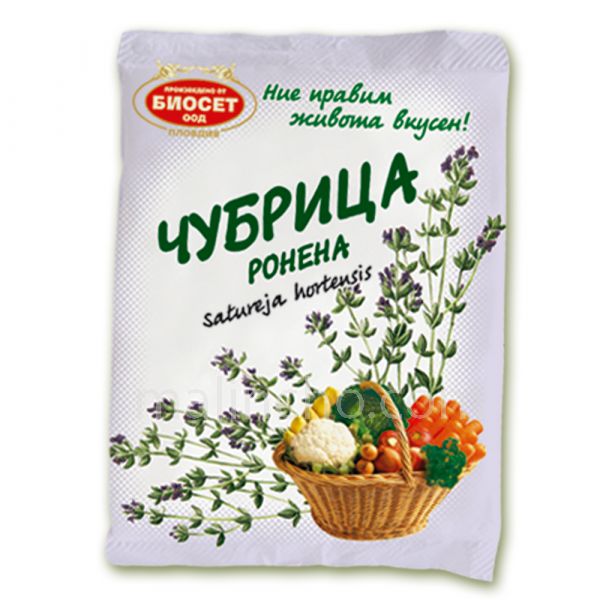
Savory 10g
- Buy 10 for $0.94 each and save 5%
Ask any Bulgarian what smell they associate most with home cooking and the answer comes quickly: chubritsa. This small, peppery herb — dried summer savory, known in Bulgarian as чубрица — is the single most important spice in Bulgarian cuisine. It appears in bean soups, grilled meats, salads, cheese dishes, and spice blends. It sits on restaurant tables as a condiment alongside the salt. Without it, the food does not taste Bulgarian.
About Chubritsa — Bulgarian Summer Savory
Chubritsa (Satureja hortensis) is dried summer savory — a low-growing annual herb native to the Mediterranean and widely cultivated across the Balkans. Bulgaria is one of the world’s primary producers, with the warm, dry climate of the southern regions yielding herb of exceptional intensity and fragrance. The dried leaf has a bold, peppery character with earthy, slightly minty undertones — more assertive than thyme or marjoram, less sharp than oregano, and entirely its own.
This 10g packet is produced by Bioset Ltd., Bulgaria’s largest spice producer and packager, based in Plovdiv and certified to IFS Food and ISO 22000 standards. Bioset has been supplying the Bulgarian domestic market and exporting to the USA, Canada, and Australia for over three decades. Their dried chubritsa is the standard by which Bulgarian home cooks measure the herb — reliably fragrant, consistently dried, and packaged to retain the essential oils that carry the flavour.
How to Use It
Chubritsa is used generously in Bulgarian cooking — not as a background note but as a primary seasoning. The herb is added whole or crumbled and is rarely cooked for long; it is typically added toward the end of cooking or used as a finishing herb and table condiment:
Bob chorba (bean soup): The essential herb for traditional Bulgarian bean soup — added at the end of cooking in generous quantity; this is non-negotiable in authentic recipes
Grilled meats: Rubbed onto kebapche and kyufte before grilling, or sprinkled over the finished meat as a condiment at the table
Sharena sol: The primary herb ingredient in Bulgaria’s beloved spice-salt blend — chubritsa, salt, paprika, and fenugreek combined into the seasoning used at every Bulgarian table
Stuffed peppers and lentil dishes: Added to the filling or cooking liquid; complements legumes particularly well
Fresh white cheese: Crumbled over sirene or stirred into a simple cheese spread with butter — a classic Bulgarian meze
Table condiment: Set out in a small dish alongside salt for guests to season their own food — as it is done at traditional Bulgarian mehanas
What Makes It Special
Chubritsa cannot be substituted. Thyme, oregano, and marjoram are related in flavour family but none of them replicates the specific peppery depth of summer savory — and for Bulgarian recipes that call for chubritsa, the difference is immediate and obvious. Grown and dried in Bulgaria, packed by Bioset — this is the authentic article, sourced from a country where the herb has been cultivated and used for centuries and where quality is a matter of culinary pride.
Quick Facts
✓ Bulgarian name: Chubritsa (чубрица)
✓ Common English name: Dried summer savory
✓ Scientific name: Satureja hortensis
✓ Form: Dried whole and crumbled leaf
✓ Net weight: 10g
✓ Flavour profile: Peppery, earthy, slightly minty — bold and assertive
✓ Manufacturer: Bioset Ltd., Plovdiv, Bulgaria
✓ Country of Manufacture: Bulgaria (imported)
✓ UPC: 3800081440750
✓ SKU: SP01
Bulgarian Kitchen Tip
The simplest and most revealing way to experience chubritsa is to make sharena sol at home: combine one part dried chubritsa, one part Krina fine salt, one part sweet paprika, and a small amount of dried fenugreek. Mix well, taste, adjust. Set it on the table in a small flat dish and use it as the Bulgarian kitchen’s all-purpose condiment — on bread with butter, on sirene, over grilled meats, or stirred into yogurt. This blend is what Bulgarians mean when they say food tastes like home. For bob chorba, add a tablespoon of chubritsa for every litre of bean soup in the last ten minutes of cooking, then finish with a generous drizzle of sunflower oil and a scatter of dried red pepper.
Pairs perfectly with: Fine Salt Krina 1kg (SKU: SpKr31), Bulgarian Sheep Feta Sirene Vacuum 400g (SKU: C ez09), Lutenitsa (SKU: LHDER).
Frequently Asked Questions
What is chubritsa and why is it so important in Bulgarian cooking?
Chubritsa (чубрица) is the Bulgarian name for dried summer savory (Satureja hortensis) — a low-growing herb with a peppery, earthy flavour that has no close substitute. It is the most used herb in Bulgarian cuisine, appearing in bean soups, grilled meat seasonings, cheese dishes, pickle brines, and the beloved spice blend sharena sol. In Bulgarian culture it occupies the same essential role that oregano holds in Italian cooking or cumin in Indian cooking: it is the characteristic note that makes the food immediately identifiable as Bulgarian.
What is sharena sol and how do I make it with chubritsa?
Sharena sol (шарена сол) means “colourful salt” in Bulgarian — a traditional spice-salt blend that sits on every Bulgarian table. The core recipe combines dried chubritsa, fine salt, sweet paprika, and dried fenugreek in roughly equal parts by volume, mixed well. Some versions add dried thyme, roasted corn flour, or dried red pepper. The result is used as a table condiment, a bread dip (with butter or oil), a rub for meats, and a seasoning for everything from grilled vegetables to white cheese. Krina Fine Salt (SKU: SpKr31) is the standard salt base for making it at home.
Can I substitute thyme or oregano for chubritsa?
Not without noticeable difference. Thyme is related but significantly milder and more floral; it lacks the pepper edge that makes chubritsa so assertive. Oregano is more pungent but has a different aromatic profile — it brings a Mediterranean Mediterranean character rather than the Balkan one. Marjoram is closer than either, but still noticeably softer. For recipes that specifically call for chubritsa — particularly bob chorba — the substitutes produce a recognisably different dish. There is no shortcut: chubritsa is its own thing.
How much chubritsa should I use in Bulgarian bean soup (bob chorba)?
Bulgarian home cooks use chubritsa generously — typically one to two heaped teaspoons per litre of finished soup, added in the last ten to fifteen minutes of cooking so the herb infuses without becoming bitter. The beans should already be fully cooked before the chubritsa goes in. After the herb, finish the soup with a tablespoon of sunflower or vegetable oil poured directly into the pot, a pinch of dried red pepper, and taste for salt. This sequence — beans, chubritsa, oil, pepper, salt — is the standard method in Bulgarian households.
Is summer savory the same as winter savory?
No. Summer savory (Satureja hortensis) and winter savory (Satureja montana) are related but distinct. Summer savory is an annual with a softer, more rounded peppery flavour — it is the variety used in Bulgarian cuisine and the one sold here. Winter savory is a perennial with a sharper, more resinous, and somewhat woodier character. In Bulgarian cooking, chubritsa always refers to summer savory. Winter savory is rarely used in Bulgarian kitchens and is not a substitute.
| Name of the product | Savory 10g |
|---|---|
| SKU | SP01 |
| Shipping Weight | 0.030000 |
| Country of Manufacture | Bulgaria |
| Items per Case | 5 |
| UPC Code | 3800081440750 |
| Manufacturer | Bioset |